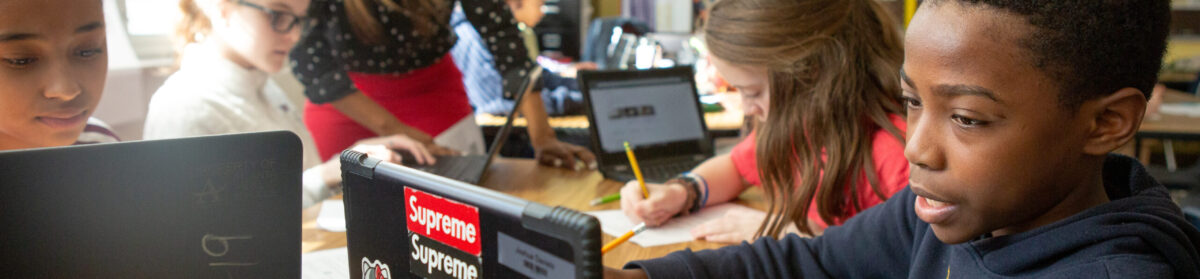
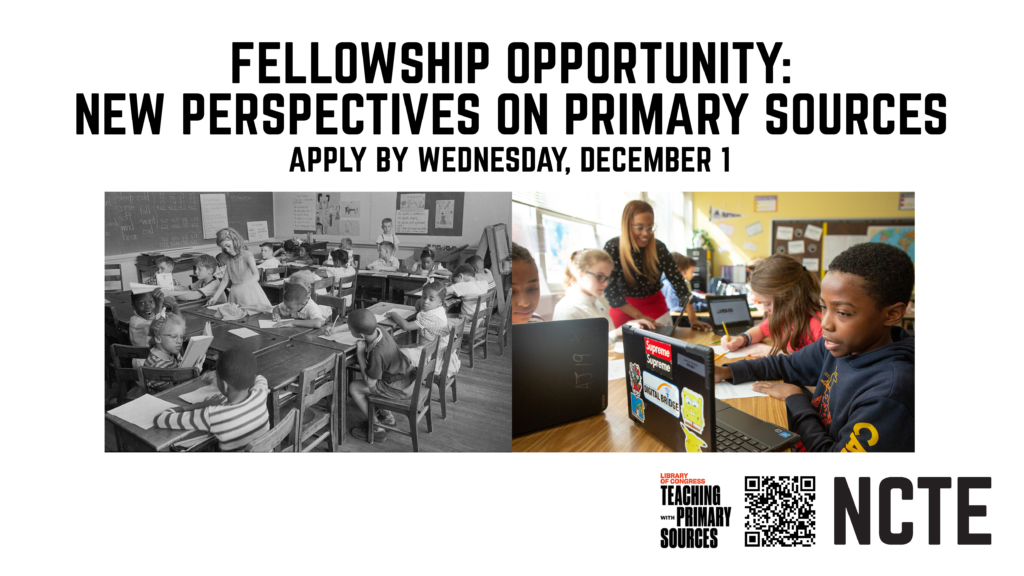
The National Council of Teachers of English, in partnership with the Library of Congress, invites high school teachers to apply for a fellowship in the New Perspectives on Primary Sources (NPPS) Project. The deadline to apply is Wednesday, December 1, 2021.
As one of the project facilitators, I am pleased to share that the National Council of Teachers of English, in partnership with the Library of Congress, invites high school teachers to apply for a fellowship in the New Perspectives on Primary Sources (NPPS) Project.
Fellowships offer approximately 60 hours of professional learning alongside the opportunity to contribute to an instructional unit and chapter for an NCTE edited book. As conditions for travel might allow, participants will be given complimentary registration for the 2022 NCTE Annual Convention in November.
Stipends of $2,000 will be offered.
Applicants must be current educators teaching in classrooms. English, literature, writing, speech communication, media studies, school librarians, and journalism teachers are all invited.
The deadline to apply is Wednesday, December 1, 2021.
This past week, I was honored to present “Digital Diligence” as the third in a series of webinars in this year’s Medialogue on Propaganda Project. Learn about “digital diligence”—an alert, intentional stance that helps both teachers and students use technology productively, ethically, and responsibly.
In this webinar, learn about “digital diligence”—an alert, intentional stance that helps both teachers and students use technology productively, ethically, and responsibly. Join us for a discussion on how to build adolescents’ skills for protecting online privacy, minimizing digital distraction, breaking through “filter bubbles,” fostering civil conversations, evaluating the information on the Internet, creating meaningful digital writing, and deeply engaging with multimedia texts.
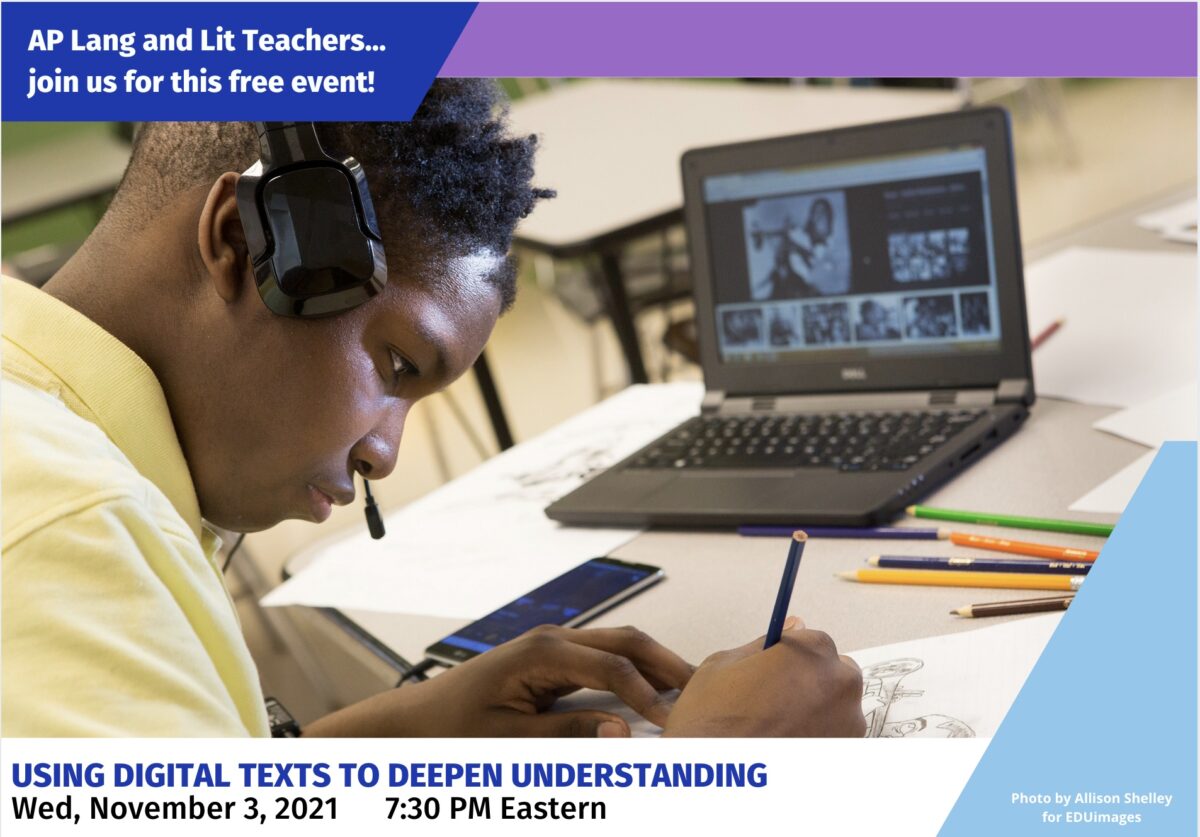
Join Brandon Abdon (@BrandonAbdon), Alice Wu, Andy Schoenborn (@aschoenborn), and Troy Hicks (@hickstro) as we explore ways to give students a choice in topic and approach, all as they develop their digital writing skill. Watch the Live Stream Here on Wednesday, November 3, 2021 from 7:30 to 9:00 PM Eastern
Now more than ever, students need hope, guidance, and accessible avenues to attain digital equity. Discussing how to use “Snow Fall: The Avalanche at Tunnel Creek” from The New York Times as a multimedia mentor text, join Brandon Abdon (@BrandonAbdon), Alice Wu, Andy Schoenborn (@aschoenborn), and Troy Hicks (@hickstro) as we explore ways to give students a choice in topic and approach, all as they develop their digital writing skills. We invite you to join us to see what students can achieve.
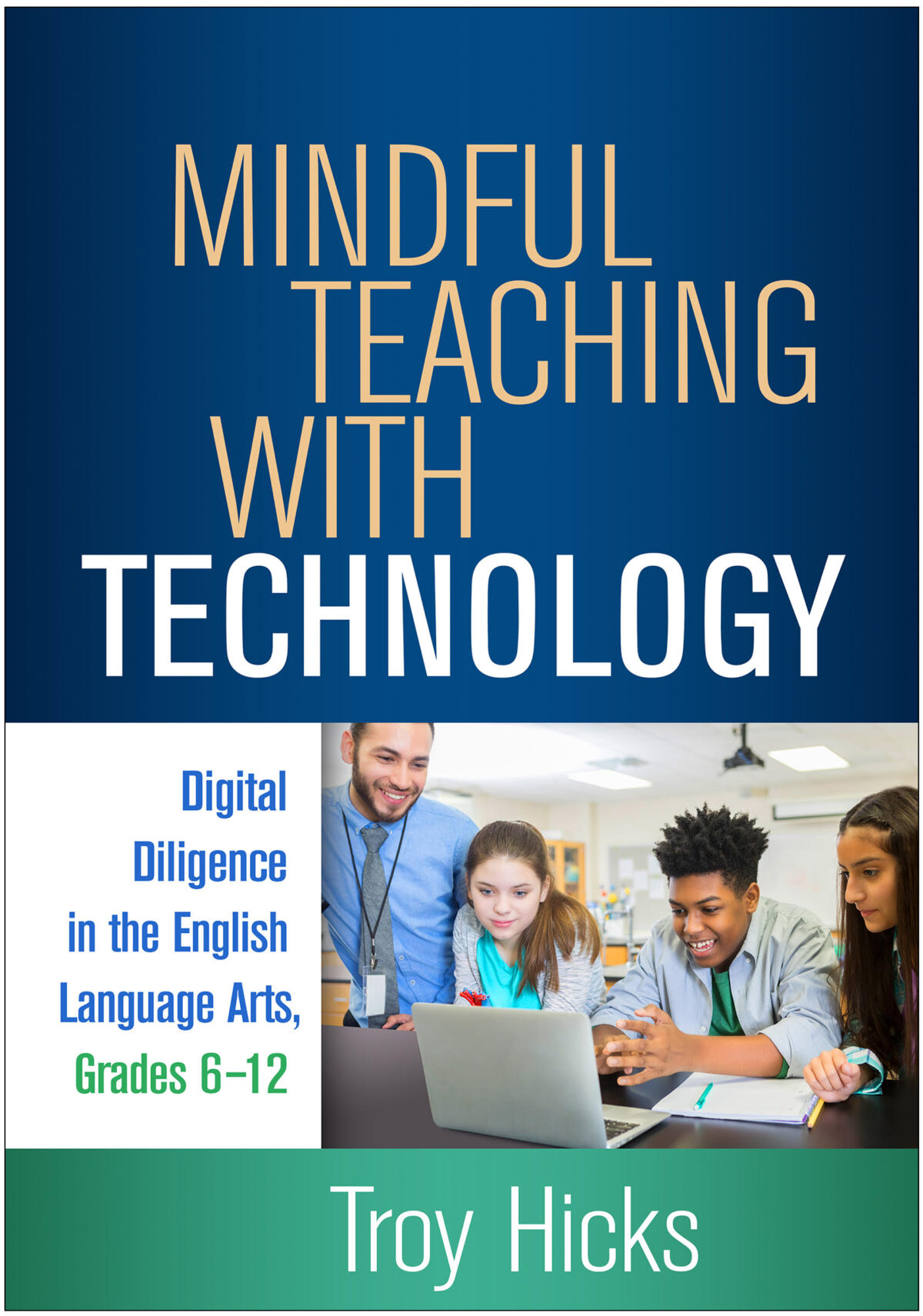
Set for release on October 29, 2021, my book Mindful Teaching with Technology: Digital Diligence in the English Language Arts, visitors to my website can receive a special offer of 25% off from Guilford Press. Learn more…
Mindful Teaching with Technology Cover Image (Courtesy of Guilford Press)
Set for release on October 29, 2021, my Guilford publication, Mindful Teaching with Technology: Digital Diligence in the English Language Arts, Grades 6-12 (2021).
The book’s companion page is available here, and the links provided here were active as of June 1, 2021, and are presented in the order they appear in the book.
Time to binge on some edu-listening! This fall, I have been fortunate enough to be invited to three different podcasts, sharing my passion for teaching writing with technology. Find the links here.
Photo of podcasting equipment by Will Francis on Unsplash
This fall, I have been fortunate enough to be invited to three different podcasts, including Teach Wonder (produced by Ashley O’Neil and Julie Cunningham from CMU’s Center for Excellence in STEM Education), Middle School Hallways (produced by my colleague and co-author Jeremy Hyler), and All About Literacy (produced by my colleagues Erica Hamilton from Grand Valley State University and Deb Van Duinen from Hope College).
I thank them for the opportunity to talk about education broadly, and my passion for teaching writing with technology. Find the specific episodes here:
What are your best practices in digital literacy? If you — or a K-12 classroom ELA educator that you know — are doing exceptional work and might be interested in being interviewed during the month of October or November 2021, please fill out the form linked in this post.
As we transition from “emergency remote teaching” and into a new era of hybrid learning that embraces technology more fully, I am working on a chapter for an edited collection that will share classroom case studies of best practices in digital literacy.
Beyond lessons that are just digitally delivered because they must be, I am looking for exceptional examples of K-12 ELA teachers inviting their students to engage in digital literacy practices that NCTE describes as “interconnected, dynamic, and malleable.” I wonder: how are you encouraging students to engage in active inquiry, connected reading, media literacy, and digital writing in ways that support authentic literacy learning?
If you — or a K-12 classroom educator that you know — are doing exceptional work and might be interested in being interviewed during the month of October or November via WebEx (video call or phone call-in), please take a moment to complete this brief Google form between now and October 15, 2021. I will get back to you about a possible interview after mid-October.
Thanks for spreading the word and sharing your work.
Troy Hicks, professor of English and Education at Central Michigan University, former middle school language arts teacher, and Director of the Chippewa River Writing Project shares about New Literacies in the classroom.
Have you listened to CCIRA Literacy Conversations yet?
Thanks to Molly Rauh and Jessica Rickert for the opportunity to talk about teaching, writing, and technology with the @ColoradoReading podcast!
As part of her keynote, Dr. Maha Bali invited us to build on Ian M. MacKay’s “Swiss cheese model applied to COVID19 prevention” to think about application to writing pedagogy and the use of these tools, as well as systematic and individual challenges that might inhibit our work.
As an inquiry group of about two dozen educators, teacher consultants from four National Writing Project Sites have gathered together in monthly meetings over the 2020-21 school year to explore what we have broadly named “writing assistance technologies” and their impacts on our teaching, our students’ writing, and the field of teaching writing more broadly. This project has been named “Ahead of the Code” and, yesterday, we met for an open conference, inviting colleagues to join in our inquiry, making our practice public, and sharing some ideas from our exploration of tools ranging from grammar and spelling checkers to automated essay scoring.
What I found most compelling about our conversations from the day is that many of the questions that teachers have explored this year have moved beyond our initial queries such as “what are these tools” and “how might I use them” into deeper, more substantive questions about what these tools really are, algorithmically, how they work with assumptions about academic language, and what purposes they ultimately serve. There were a number of creative ways that these educators have been pushing on the edges of writing assistance technologies that would previously have been seen as confining (e.g., inviting students to choose the writing assistance tool that they feel will best help them rather than being assigned a particular tool) as well as rethinking the use of these tools to make them better fit in a process-oriented pedagogy (e.g., using peer review tools at the sentence-level to offer feedback on compound and complex construction, rather than essay-level feedback, which can feel overwhelming). My hope is that more of their reflections (and resources from the sessions) will appear on our group’s blog soon.
As part of our day, we were welcomed in a keynote with Dr. Maha Bali (@bali_maha), an Associate Professor of Practice at the American University in Cairo’s Center for Learning and Teaching, whose work includes posts in Hybrid Pedagogy and as a founder of Equity Unbound. As part of her keynote, our conference planning team had worked with her to think through the keynote session, and she wanted to build on Ian M. MacKay’s “Swiss cheese model applied to COVID19 prevention” to think about application to writing pedagogy and the use of these tools, as well as systematic and individual challenges that might inhibit our work. Though we didn’t quite have enough time to think through the version I created during the keynote talk (as she had us engaged in a great breakout room discussions with one of the Liberating Structures protocols), I did want to share some brief thoughts here, as well as my image.
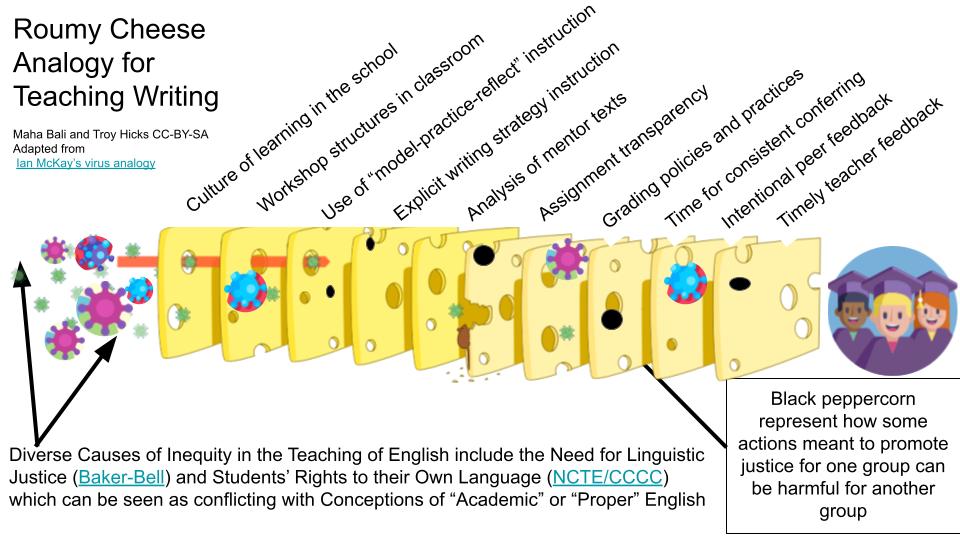
Roumy Cheese Analogy for Teaching Writing (Created by Troy Hicks with a template from Maha Bali)
As I constructed my version of the Roumy Cheese model, I tried to think systemically about where we find ourselves with writing instruction, broadly, and with the use of writing assistance tools. That said, I didn’t make notation of the tools in my model. Instead, I focused on the context in which we find ourselves teaching writing, which includes diverse causes of inequity in the teaching of English that include the need for Linguistic Justice (Baker-Bell) and a long-held recognition of Students’ Rights to their Own Language (NCTE/CCCC); these both not the ways that teachers must balance the tension between students’ home languages and dialects, some of which can be seen as conflicting with more commonly-held conceptions of “academic” or “proper” English. With that, I took the “larger” to “smaller” approach as I moved left-to-right, beginning with school culture and the prevalence of the workshop structure in ELA classrooms, broadly, on the far left, and then to some of the ideas from Graham et al.’s work on the use of “model-practice-reflect” and explicit strategy instruction, heading toward the middle.
Continuing to the right, I thought that we should look at moves that individual teachers make during workshop instruction including an analysis of mentor texts, effective design of transparent assignments, and generative (as compared to punitive) grading policies and practices. Then, we move further into individual teacher decision-making, we think about the ways that students build in intentional time for conferring and scaffolding intentional peer feedback. These moves inside the classroom are then supported by timely and effective feedback outside the classroom, too, the final slice on the right, and the best way to support student writers as they continue to learn and grow.
Of note, I don’t talk too much about any particular writing assistance technology in my model. If there are moments where these technologies could be used (at a system-wide, school-wide, grade-level, or individual teacher level), my argument is that a skilled teacher can probably figure out a way to do so (even if the use of the tool, such as a grammar checker or plagiarism detection service might be used in a way that is slightly at odds with the way that it was originally intended to be used). For instance, we talked during the conference about how we might take a gamified grammar experience and invite students to think not only about correcting errors (like fixing commas in a series), yet also taking those model sentences and adapt them to one’s own writing. Or, another colleague talked about how she had students choose a writing assistance technology to focus on one element (concision, for instance, with the Hemingway editor), and then would be encouraged to pick a different technology and focus the next time, such as a grammar checker.
There is probably a place to think about the writing assistance technologies in a more explicit manner by layering them into the Roumy Cheese Analogy. That will need to wait, for now. Again, I thank Maha Bali for introducing it to us as a way to stretch our thinking about systematic challenges we face in education. And, as we move from the questions about what the tools are to more substantive questions about how to use them (and repurpose them from their original use), I am encouraged to see the ways that we can continue to stay “ahead of the code.”
those that teach high school students preparing for college, as well as those at two- and four-year institutions — continue to extend and adapt their teaching practices in a post-pandemic world, we know that there are still no “best” practices, yet we continue to get better. We want to learn from you! http://bit.ly/better-practices
As online literacy instructors — including those that teach high school students preparing for college, as well as those at two- and four-year institutions — continue to extend and adapt their teaching practices in a post-pandemic world, we know that there are still no “best” practices, yet we continue to get better. We want to learn from you!
Each chapter within this digital publication will include course materials, accompanying text where authors narrate their experience and reflect on course content, and video interviews. Each chapter will be co-authored by an expert in online writing instruction specializing in the particular theoretical approach alongside a colleague teaching the approach for the first time. This parallel view offers readers expert knowledge of research-based practices as well as insights into the questions and challenges new instructors will encounter as they apply this approach for the first time.
Topics/themes to be explored could include:
Ungrading/Contract grading
International/Global Contexts
Support for Multilingual Writers
Design and Accessibility
Social Justice and Anti-Racism
Culturally Responsive Teaching
Reading/Literacy Support
WAC/WID Initiatives
Multimodal/Digital Composition
Bridge or Accelerated Learning
Or, other writing-related topics
Proposals, submitted via Google Form, should include the following:
Contact information for both co-authors (name, institutional affiliation, position, email)
The broad topic(s) or theme(s) of online literacy instruction better practice(s) that will be addressed in the chapter
Brief overview of theories/scholarship that inform your teaching and this practice (apx 250 words)
A description of your online teaching context and students (apx 250 words)
A description of the “better practice” and how you implement it (apx 250 words)
Proposals due May 31st with editors notifying authors by July 15, 2021.
Authors of accepted proposals will be invited to participate in an iterative, inquiry-driven process of chapter development throughout the fall of 2021. Instead of drafting chapters in isolation, the community of contributors will regularly meet to discuss practices, draft chapters, and give feedback. Attendance is, of course, voluntary, though highly encouraged. At the end of this process, authors should have a complete initial draft of their chapter.
Please submit by entering the necessary information into this Google form.
What does it mean to engage students in real time, video class sessions? During the hour-long webinar, we will model active learning strategies that can be implemented in middle school, high school, and higher ed remote learning contexts.
What does it mean to engage students in real time, video class sessions? Some people think that simply having “cameras on” is the answer to student engagement. However, engagement comes when students are cognitively involved, emotionally connected, and participating actively.
Join Kristen Hawley Turner and Troy Hicks as they model strategies for building relationships with learners, implementing writing-to-learn strategies, and prompting breakout room activities with effective protocols for discussion, collaboration, and accountability.
During the hour-long webinar, we will model active learning strategies that can be implemented in middle school, high school, and higher ed remote learning contexts.
 As one of the project facilitators, I am pleased to share that the National Council of Teachers of English, in partnership with the Library of Congress, invites high school teachers to apply for a fellowship in the New Perspectives on Primary Sources (NPPS) Project.